how to say what in korean informal Korean informal say answer way
Hey there, fellow language enthusiasts! Today, let’s dive into the fascinating world of Korean language and explore the difference between formal and informal words. It’s a topic that can come in handy whether you’re planning a trip to South Korea or simply want to impress your Korean friends!
Formal and Informal Words: What’s the Deal?
Learning a new language involves not only memorizing vocabulary and grammar rules but also understanding the social dynamics within that language. In Korean, as in many other languages, there are distinct levels of formality that can greatly affect how we communicate with others.
Formal language, known as “jondaetmal” in Korean, is used when speaking to someone of higher social status, such as elders, teachers, or bosses. It’s marked by an increased level of politeness and respect. On the other hand, informal language, called “banmal,” is used among friends, relatives, or people of similar age or lower social status.
Let’s delve into some examples to help you better grasp the concept:
Formal Language
 In the image above, we have a helpful chart that showcases various formal and informal words side by side. Memorizing these will undoubtedly elevate your Korean communication skills!
For instance, if you want to say “hello” formally, you would use the word “annyeonghaseyo” (안녕하세요). On the other hand, informally, you can simply say “annyeong” (안녕). The difference may seem subtle, but it’s essential to be aware of these nuances to show the appropriate level of respect to the person you’re conversing with.
Another example is the word for “thank you.” If you want to express your gratitude formally, you would say “gamsahamnida” (감사합니다) while informally, you can go with the shorter and more casual “gamsahamnida” (감사합니다).
How to Say “How Are You?”
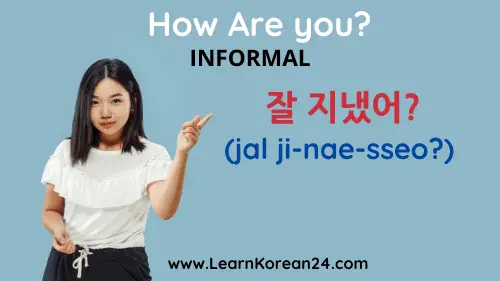 The image above provides a simple yet essential conversation starter: “How are you?” in Korean. Once you’ve greeted someone, it’s only natural to inquire about their well-being!
To ask someone “How are you?” formally, you would say “eotteohge jinaesyeyo” (어떻게 지내셨어요). This polite expression is often used when speaking to someone you don’t know well or someone of higher status. In an informal context, you may opt for the more casual “eotteohke jinae?” (어떻게 지내?).
When someone asks you how you’re doing, there are a few ways to respond. If you want to keep it formal, you can say “jal jinaeyo” (잘 지내요), which means “I’m doing well.” For a close friend, a simple “gwaenchanha” (괜찮아) meaning “I’m fine” will suffice.
Understanding these subtle linguistic variations allows you to navigate social interactions in Korean more smoothly. Plus, it shows respect for the culture and language!
So the next time you find yourself chatting with a Korean speaker, impress them with your newfound knowledge of formal and informal words. Remember, using the right level of language can go a long way in building strong connections and friendships.
Keep learning, keep exploring, and let the world of languages continue to amaze you!
If you are looking for How To Say “How Are You?” In Korean And How To Answer - LearnKorean24 you’ve visit to the right page. We have 5 Images about How To Say “How Are You?” In Korean And How To Answer - LearnKorean24 like Formal and Informal Words in Korean | Korean 101 | Pinterest | Korean, How to say “I” and “Me” in Korean in Both Informal and Formal and also How to say “I” and “Me” in Korean in Both Informal and Formal. Here you go:
How To Say “How Are You?” In Korean And How To Answer - LearnKorean24
learnkorean24.comkorean informal say answer way
Learn Korean - KoreanClass101.com | Alfabeto Coreano, Frases Coreanas
 www.pinterest.comphrases useful koreanisch lernen koreanclass101 coreano japanese algunas koreanclass101com koreanische alphabet koreanisches busan japanische pronunciaciones sprache japanisch mandarin weltsprachen wörter
How To Say “I” And “Me” In Korean In Both Informal And Formal
 www.youtube.comHow To Say Sorry In Korean Informal
 thebtutor.blogspot.comFormal And Informal Words In Korean | Korean 101 | Pinterest | Korean
www.pinterest.comkorean formal informal words language learn learning speak vs basic hangul phrases study domandhyo pt korea part hyo dom culture
Phrases useful koreanisch lernen koreanclass101 coreano japanese algunas koreanclass101com koreanische alphabet koreanisches busan japanische pronunciaciones sprache japanisch mandarin weltsprachen wörter. Korean formal informal words language learn learning speak vs basic hangul phrases study domandhyo pt korea part hyo dom culture. How to say sorry in korean informal